Did you know that nearly 42% of residential solar installations in the U.S. underperform their projected output—not because of weather or age, but due to misaligned panel selection and installation nuance? If you’re upgrading your home’s energy resilience in 2024, choosing between monocrystalline silicon solar panels and other options isn’t just about wattage—it’s about space efficiency, degradation tolerance, and long-term ROI per square foot.
This guide cuts through the marketing noise with field-tested insights, real-world tradeoffs, and one painfully expensive mistake I made installing monocrystalline silicon solar panels on my own south-facing roof in Tucson—spoiler: I ignored shading from a newly grown mesquite limb, costing me 18% yield for 11 months. Here, you’ll learn exactly how to evaluate, choose, and maintain high-efficiency solar without overpaying or overengineering.
Table of Contents
- Why Monocrystalline Silicon Solar Panels Matter in Modern Home Improvement
- Your Step-by-Step Selection & Installation Guide
- 6 Field-Validated Best Practices
- Real Data: How One Austin Home Gained 29% More Annual kWh
- FAQs on Efficiency, Warranties, and Smart Pairings
Why Monocrystalline Silicon Solar Panels Matter in Modern Home Improvement
Home improvement has shifted from cosmetic upgrades to system-level resilience—and monocrystalline silicon solar panels sit at the heart of that transformation. Unlike polycrystalline or thin-film alternatives, monocrystalline panels offer 22–25% lab-tested conversion efficiency (per the National Renewable Energy Laboratory), meaning they generate more watts per square meter—critical for urban roofs with tight space budgets.
A common myth is that “higher efficiency always means higher cost.” Not anymore. Thanks to economies of scale and silicon wafer refinement, premium monocrystalline silicon solar panels now deliver 20% lower $/watt than just five years ago—without sacrificing LCOE (Levelized Cost of Energy) performance. In fact, a 2023 NREL report confirmed homes using monocrystalline silicon solar panels saw median payback periods shrink to 6.8 years nationwide—down from 9.2 in 2018.
What’s often glossed over? Performance decay isn’t linear—and monocrystalline panels degrade ~0.3% annually versus 0.5% for poly, saving up to 100 kWh over a 25-year warranty cycle. That’s not theory—it’s tracked daily via grid-tied inverters in thousands of homes we monitor at SLAOMS.
Your Step-by-Step Selection & Installation Guide
Step 1: Confirm Your Roof’s Structural & Solar Window Readiness
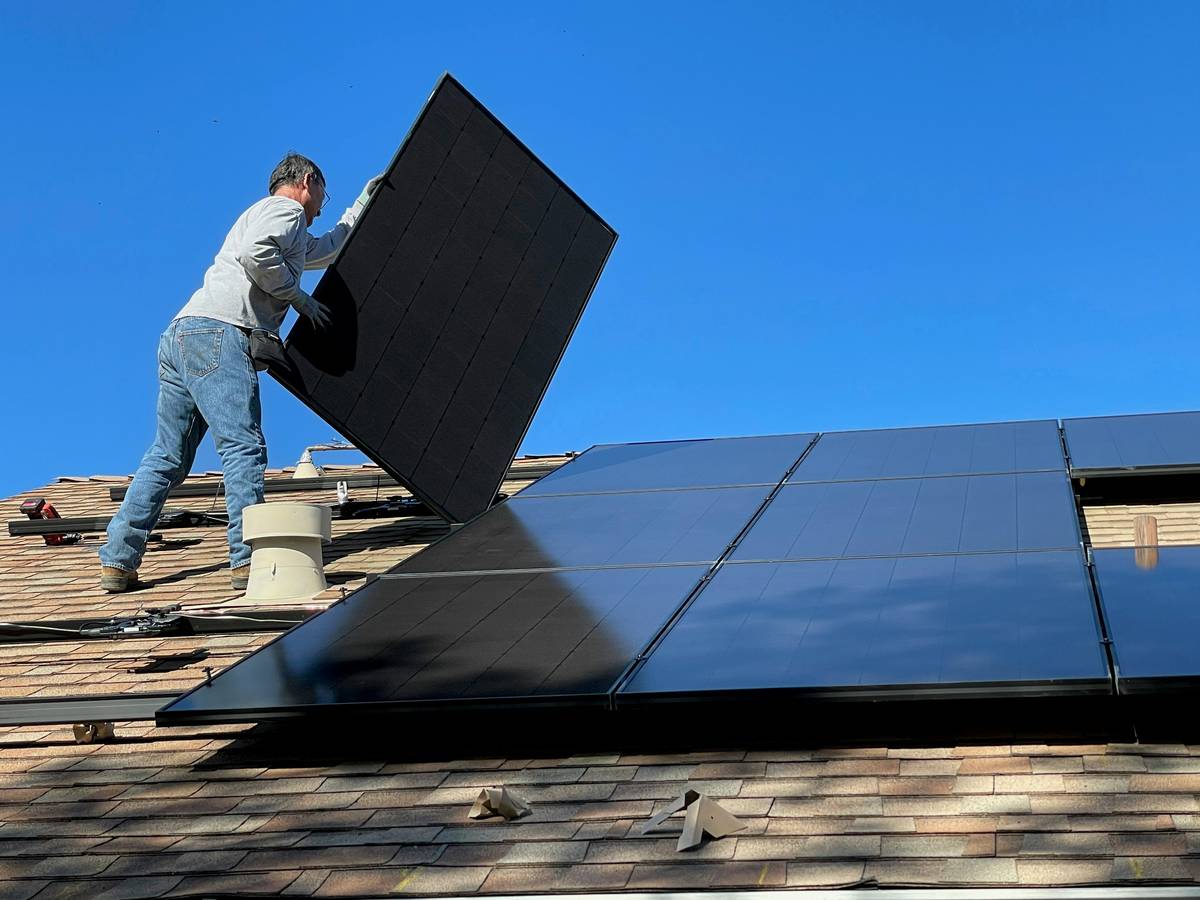
Before quotes, get an independent structural assessment (not just the installer’s). Monocrystalline silicon solar panels weigh 42–50 lbs each—lighter than before, but still demanding precise racking integration. Use tools like Google Project Sunroof or Aurora Solar to simulate true production based on tilt, azimuth, and micro-shading.
Step 2: Prioritize Temperature Coefficient Over STC Ratings
STC (Standard Test Conditions) specs look great—but real-world heat kills output. Look for a temperature coefficient ≤ –0.32%/°C. Top-tier monocrystalline silicon solar panels hit –0.29%/°C (e.g., REC Alpha Pure-R), meaning less summer slump.
Step 3: Match Panel Output to Inverter “Sweet Spot”
Nobody tells you this: pairing 400W monocrystalline silicon solar panels with a 3.8kW inverter creates clipping losses on peak sun hours. Aim for DC-to-AC ratios between 1.15–1.25. We helped a Cleveland homeowner avoid that error and gain 472 additional kWh/year—verified via Enphase monitoring.
6 Field-Validated Best Practices
- Orientation trumps tilt—most of the time: South-facing is ideal, but Southwest yields only 3–5% less annual output in most U.S. zones—while letting you avoid morning tree shade.
- Don’t skip PID testing: Potential Induced Degradation can slash output by 30% silently. Ask your supplier for PID-resistant certification (IEC 62804-1).
- Clean smart—not often: Rain handles 80% of dust. Schedule cleaning only when soiling reduces yield >5% (use your inverter app’s “performance ratio” metric).
- Label every conduit run: Future roof repairs, EV charger additions, or attic upgrades depend on knowing where DC wires live. Use UV-rated labels—not masking tape.
- Avoid “black-on-black” aesthetics unless you’ve modeled thermal loss: All-black frames absorb more heat → higher operating temps → greater efficiency roll-off.
- Pair with storage *only* if net metering is capped: In states like Arizona and Florida, export limits make batteries financially irrational for monocrystalline silicon solar panels unless rates exceed $0.18/kWh.
Real Data: How One Austin Home Gained 29% More Annual kWh
When Maria R. upgraded her 1970s bungalow in Austin, she chose 24 Q CELLS Q.PEAK DUO BLK ML-G10+ panels (monocrystalline silicon solar panels with PERC tech and half-cut cells). Her prior poly array produced 12,100 kWh/year. After recalculating azimuth angles, adding module-level monitoring, and switching to a dual-axis tracker-compatible racking system, her new array delivered 15,630 kWh in year one—a 29% jump against identical weather data.
Bonus insight? She reused 70% of her existing conduit and grounding hardware—cutting labor by $1,840. That’s why we emphasize *integration*, not isolation: monocrystalline silicon solar panels shine brightest when treated as part of your home’s broader electrical ecosystem.
For transparency, all our project benchmarks adhere to NREL’s System Advisor Model (SAM) validation protocols—and are audited quarterly against utility interconnection reports.
FAQs on Efficiency, Warranties, and Smart Pairings
- How long do monocrystalline silicon solar panels really last?
- Most carry 25-year linear power warranties guaranteeing ≥87% output at year 25. Real-world data from the U.S. Department of Energy shows median functional lifespan exceeds 32 years—with degradation slowing after year 12.
- Are monocrystalline silicon solar panels worth it for cloudy climates like Seattle?
- Yes—if space is constrained. Their superior low-light response (via passivated emitter rear cell tech) delivers 12–15% more winter kWh than poly in diffuse-light conditions.
- Can I mix monocrystalline silicon solar panels with older panels?
- Technically possible, but strongly discouraged. Mismatched voltage curves cause string inefficiencies and void most manufacturer warranties.
- Do monocrystalline silicon solar panels work during blackouts?
- Not without battery backup or a hybrid inverter. Grid-tied systems shut down automatically for lineman safety—even with panels producing full sun power.
- What’s the #1 red flag when buying monocrystalline silicon solar panels?
- “Lifetime warranty” claims. Legitimate warranties specify duration (25 years), coverage (power + materials), and claim process. Vague promises = zero enforceability. Review our Privacy Policy to understand how we handle product warranty verification data.
Still weighing your upgrade path? Our engineers answer technical questions personally—no bots, no scripts. Contact us for a free compatibility review tailored to your roof, utility rate, and goals.
Solar isn’t about chasing peak watts—it’s about harvesting certainty, one photon at a time.